At Vishruth Orthopedic Centre, we provide spondylolisthesis treatment in Nandini Layout to help patients manage spinal slippage, relieve pain, and restore mobility. Our experienced orthopedic specialists design personalized treatment plans using advanced diagnostics, physiotherapy, and minimally invasive techniques for faster recovery.
Our comprehensive approach combines corrective exercises, posture training, pain management, and patient education to prevent future complications. With the Best Spondylolisthesis Treatment in Nandini Layout, patients regain a pain-free and active lifestyle under expert care.
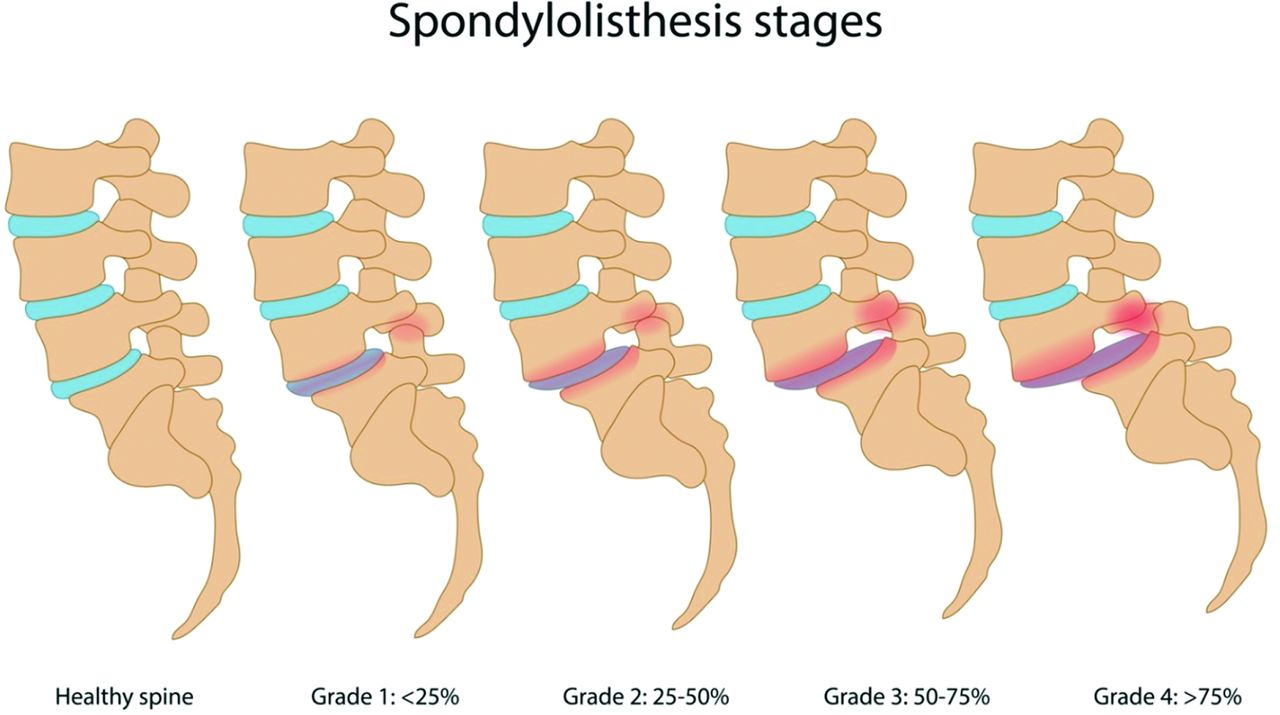
Spondylolisthesis is a spinal condition in which one vertebra slips forward over the vertebra below it. This misalignment can lead to varying degrees of pain, nerve compression, and reduced spinal stability. It can occur due to congenital defects, spinal degeneration, traumatic injuries, or stress fractures commonly seen in athletes. Depending on the severity of the slippage, individuals may experience symptoms ranging from mild discomfort to significant mobility limitations and nerve-related issues such as numbness or weakness in the legs. Early diagnosis and treatment are essential to prevent worsening symptoms and complications.
Diagnosing spondylolisthesis involves a thorough physical examination and imaging studies such as X-rays, CT scans, or MRI scans to determine the degree of vertebral slippage and assess nerve involvement. Treatment depends on the severity of the condition. Mild cases often respond well to conservative management, including physical therapy, pain relief medications, and lifestyle modifications to reduce spinal stress. Severe cases, particularly those involving nerve compression or instability, may require surgical intervention to realign and stabilize the spine. Common procedures include spinal fusion and decompression surgery to relieve pressure on nerves and restore spinal stability.
Pain management is a crucial aspect of spondylolisthesis treatment. Nonsteroidal anti-inflammatory drugs (NSAIDs), muscle relaxants, and targeted physical therapy exercises can help alleviate pain and improve mobility. In cases where non-surgical approaches are ineffective, a back brace may be recommended to limit excessive spinal movement. Rehabilitation plays a key role in recovery, focusing on strengthening the core and back muscles to support the spine. Long-term preventive measures, such as maintaining a healthy weight, practicing good posture, and engaging in low-impact exercises, can help reduce strain on the spine and prevent further progression of the condition.
Spondylolisthesis is a spinal disorder that requires timely intervention to manage pain, restore function, and prevent long-term complications. While conservative treatments are effective for many cases, surgical options are available for severe instability or nerve compression. Advances in spinal surgery and rehabilitation have significantly improved patient outcomes, allowing individuals to regain mobility and lead an active lifestyle. Preventive care, particularly for individuals at risk due to age, genetics, or sports-related stress, is essential in reducing the likelihood of developing or worsening spondylolisthesis.
You can get effective spondylolisthesis treatment in Nandini Layout at Vishruth Orthopedic Centre, where experienced spine specialists provide personalized care for spinal slippage and pain relief.
Spondylolisthesis is a condition where a vertebra slips forward over the one below it. Symptoms include lower back pain, stiffness, muscle tightness, numbness, or weakness in the legs.
Treatment includes physiotherapy, core strengthening exercises, pain management, lifestyle modifications, and in severe cases, minimally invasive or surgical interventions.
Recovery time depends on severity, age, and adherence to the treatment plan. Mild cases may improve within weeks with physiotherapy, while severe cases may require months of care or surgery.
Prevention includes maintaining proper posture, regular core strengthening, avoiding heavy lifting incorrectly, and seeking early treatment for back pain.